Showing posts with label Infrastructure. Show all posts

Friday, 15 March 2019

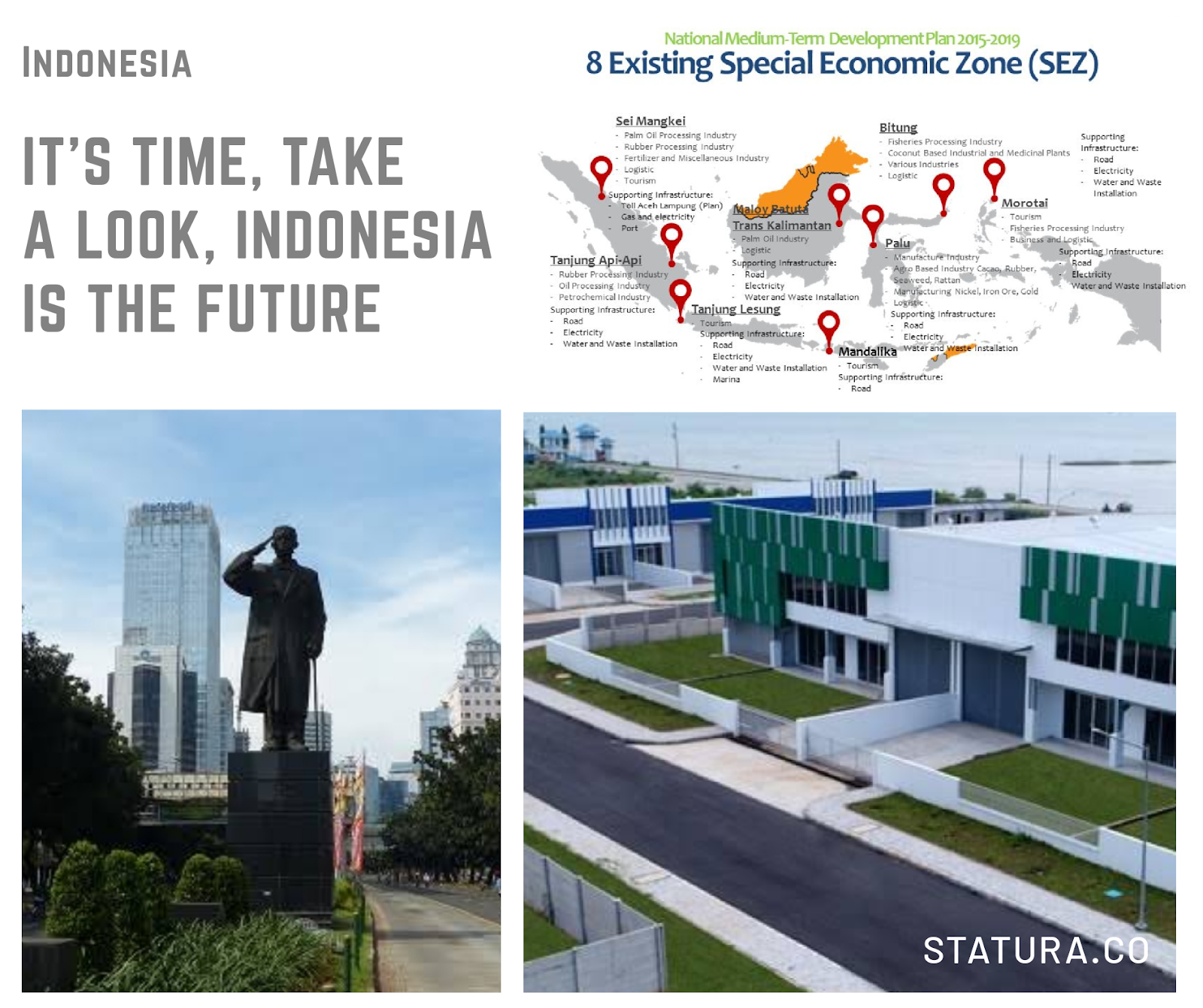
Industrial parks, indonesia is open for business


The advances that South East Asia have made demonstrate the progressive nature of this great region. It was from SE Asia where, what is termed a prehistoric civilizations dating back to 6000 BC, first developed the ability to organize agriculture, cultivated farming growing cereal. Prior to this point they were predominantly hunter-gatherers, going in search of their food source, their food came only from the wild. It took Japan until the Jõmon period to adopt such techniques, circa 5000 BC. China came 1000 years later. You could even argue that through their achievements that SE Asia heralded in the Bronze Age. Tools much needed to sustain their advance culture.

Throughout Asia, you see evidence as to how the western societies have benefited from Asian innovation. Circa 3500 BC ancient cities emerged, wide streets, bathing platforms, drainage and reservoirs.  These were located in the Indus valley, now known as Pakistan.


Babylonians developed an alphabet which was adopted by the Greeks. Egypt relied on Babylon for trade, diplomacy the selling of cedar wood, olive oil and resins for mummification.

Asia has not emerged it has returned. Trading networks have functioned since the 8C BC, between Greece, Persia and India. India had established trading routes through South East Asia and China. China had at this time consolidated its power by possessing the Xia, Shang, and Zhou dynasties.  They had established trade routes to Southern Siberia bringing wealth to the nomadic peoples residing there.  China also, had routes to Bactria, trading freely. Bactria, an area north of the Hindu Kush, straddling parts of Afghanistan, Tajikistan, Pakistan and Uzbekistan. As a point of interest, it is thought that they were using single axle chariots 2000 years BC.

Greeks, by the 1ST Century BC had a vast maritime fleet.  One hundred and twenty ships per year sailed through the red sea, using monsoon winds in order to reach the ports of India. India through its own trade routes into SE Asia provided a staging post giving access to a wealth of spices, jade, beads etc.

Moving forward to today, it's fair to say that much of today's government policy comes from the many large family run corporations that have over years dominated the trade of this region. Asia is not short of family run conglomerates.  But, Indonesia’s government  are playing a key role in re-distributing wealth. Technology have opened the way for this process to start.

China's investment in sea routes East to West, their investment in the Suez Canal along with their influence over Israel. Israel have commissioned a rail network linking the Red sea with the Mediterranean sea forming an important part of the Belt and Road system. Indonesia is poised to benefit from this route looking to boost trade with Mediterranean countries.


Asian countries are increasingly looking to each other for their defence, sustainability, guidance and tolerance, they pull together. To some extent they have become immune to the western attempts at “globalization”, in 1998, the Asian crisis swept through the countries of SE Asia, they are mindful that it was an Asian contagion. In 2018, they see the west as still mired by the  financial collapse of 2008, yet Asian economies are enjoying bumper growth. A point of fact, all the major growth countries of 2018, they were from Asia.

Asian countries see the US as a facilitator of technology, innovation, but they no longer look to the US for their prosperity nor their defence. They see Trump's America as a wake up call, America can not be relied upon indeed, to do so would be a handicap. The US is now dispensable when it comes to Asia.

Indonesia is also advantaged with a vast population. The government have seen China's growth and have recognised, that China manufacturing is becoming uncompetitive. For instance China daily manufacturing salaries/pay is $30, Indonesia is still at $10.  Factories, Industrial, Science parks are emerging across this vast archipelago.


The advances that South East Asia have made demonstrate the progressive nature of this great region. It was from SE Asia where, what is termed a prehistoric civilizations dating back to 6000 BC, first developed the ability to organize agriculture, cultivated farming growing cereal. Prior to this point they were predominantly hunter-gatherers, going in search of their food source, their food came only from the wild. It took Japan until the Jõmon period to adopt such techniques, circa 5000 BC. China came 1000 years later. You could even argue that through their achievements that SE Asia heralded in the Bronze Age. Tools much needed to sustain their advance culture.

Throughout Asia, you see evidence as to how the western societies have benefited from Asian innovation. Circa 3500 BC ancient cities emerged, wide streets, bathing platforms, drainage and reservoirs.  These were located in the Indus valley, now known as Pakistan.


Babylonians developed an alphabet which was adopted by the Greeks. Egypt relied on Babylon for trade, diplomacy the selling of cedar wood, olive oil and resins for mummification.

Asia has not emerged it has returned. Trading networks have functioned since the 8C BC, between Greece, Persia and India. India had established trading routes through South East Asia and China. China had at this time consolidated its power by possessing the Xia, Shang, and Zhou dynasties.  They had established trade routes to Southern Siberia bringing wealth to the nomadic peoples residing there.  China also, had routes to Bactria, trading freely. Bactria, an area north of the Hindu Kush, straddling parts of Afghanistan, Tajikistan, Pakistan and Uzbekistan. As a point of interest, it is thought that they were using single axle chariots 2000 years BC.

Greeks, by the 1ST Century BC had a vast maritime fleet.  One hundred and twenty ships per year sailed through the red sea, using monsoon winds in order to reach the ports of India. India through its own trade routes into SE Asia provided a staging post giving access to a wealth of spices, jade, beads etc.

Moving forward to today, it's fair to say that much of today's government policy comes from the many large family run corporations that have over years dominated the trade of this region. Asia is not short of family run conglomerates.  But, Indonesia’s government  are playing a key role in re-distributing wealth. Technology have opened the way for this process to start.

China's investment in sea routes East to West, their investment in the Suez Canal along with their influence over Israel. Israel have commissioned a rail network linking the Red sea with the Mediterranean sea forming an important part of the Belt and Road system. Indonesia is poised to benefit from this route looking to boost trade with Mediterranean countries.


Asian countries are increasingly looking to each other for their defence, sustainability, guidance and tolerance, they pull together. To some extent they have become immune to the western attempts at “globalization”, in 1998, the Asian crisis swept through the countries of SE Asia, they are mindful that it was an Asian contagion. In 2018, they see the west as still mired by the  financial collapse of 2008, yet Asian economies are enjoying bumper growth. A point of fact, all the major growth countries of 2018, they were from Asia.

Asian countries see the US as a facilitator of technology, innovation, but they no longer look to the US for their prosperity nor their defence. They see Trump's America as a wake up call, America can not be relied upon indeed, to do so would be a handicap. The US is now dispensable when it comes to Asia.

Indonesia is also advantaged with a vast population. The government have seen China's growth and have recognised, that China manufacturing is becoming uncompetitive. For instance China daily manufacturing salaries/pay is $30, Indonesia is still at $10.  Factories, Industrial, Science parks are emerging across this vast archipelago.


Saturday, 23 February 2019

Indonesia Launches its first MRT


It's finally arrived; Jakarta has commissioned its first Mass Transport system, the first such system in Indonesia. A project fraught with difficulty, taking longer than expected with development stopping frequently.

The system has been on trial since December, testing all supporting systems, electronic gates as well as the reactions of emergency services should the need arise.  Services will operate from March 12th, 2019.

In the past week the proud authorities invited government officials, ambassadors and journalists to trial the first MRT in Indonesia.

The final touches are taking place. They're busy touching up the paint, polishing fittings on the MRT stations' interior and walkways.

If the public trial run goes off without a hitch, the country's first MRT will start commercial operation by the end of next month.


The route initially will operate from Lebak Bulus in South Jakarta to the Hotel Indonesia traffic circle in Central Jakarta, a distance of 15.7KM. There are 13 stops, journey should take approx. 30 minutes. This will halve the time of a normal commute. For a city with more than 25M people this is significant.

Capacity

A single MRT train comprises six carriages which can carry up to 1,950 passengers. By 2024, the MRT is expected tocarry up to 430,000 passengers a day.

EU Ambassador to Indonesia Vincent Guérend has sung his praises for the Jakarta MRT, saying he loved the modern look and its well-thought-out amenities.

When he went on his trial run last week, the ambassador remarked the Jakarta MRT even appeared more modern than some old subway trains in European countries.

EU Ambassador to Indonesia Vincent Guérend, right, speaks with Ghamal Peris, MRT Jakarta's business development director, during a trial run of the MRT on Feb. 12. (Antara Photo/Rivan Awal Lingga).

Naming Rights.

MRT Jakarta is selling naming rights for eight stations on the Lebak Bulus-Bundaran Hotel Indonesia line, which allow a company to attach its brand name to a station for 10 years.

Naming rights for three stations have already been bought by state-controlled lender Bank Negara Indonesia for the Dukuh Atas-BNI Station; another state-owned lender Bank Mandiri for the Istora-Mandiri Station; and Astra International for the Setiabudi-Astra Station.

The naming rights for five more stations—Bendungan Hilir, Blok M, Senayan, Lebak Bulus and Sisingamangaraja—are still up for auction.


Investments

The Lebak Bulus-Bundaran Hotel Indonesia line makes up Phase 1 of the Jakarta MRT network which will eventually cover a total distance of 110 kilometers, linking the sprawling city's north, south, east and west.

Japan International Cooperation Agency (JICA) loaned Rp 16 trillion to the Jakarta administration for the Phase 1 construction.

Suppliers & Contractors

  • The MRT trains are produced by Japanese rail car manufacturer Nippon Sharyo, a subsidiary of Central Japan Railway Company.
  • Jakarta MRT bought 16 of their made-in-Japan trains for Rp 1.6 trillion. All of them arrived in Jakarta last year.
  • A consortium of Japanese constructor Shimitsu Kobayashi, state-owned builder Wijaya Karya and Jaya Konstruksi worked on two sections of the underground track.
  • Another consortium of Sumitomo Mitsui and Hutama Karya worked on the remaining underground track.
  • Japanese railway company Tokyu and state-owned constructor Wijaya Arya built two sections of the elevated track.
  • Japanese firms Obayashi and Shimizu formed a joint venture with local firm Jaya Konstruksi to build the remaining elevated track.


Future Lines

On Oct. 23 last year, the Japan International Cooperation Agency (JICA) agreed to loan Rp 9.4 trillion to the Jakarta Provincial Government for Phase 2 of the MRT project to build a line from Sarinah to Kota.

This is the first of two instalments which will be used to fund the first stage of construction in Phase 2.

  • Phase 2: Sarinah to Kota, track length: 7.8 kilometers, 7 underground stations: Sarinah, Monas, Harmoni, Sawah Besar, Mangga Besar, Glodok, Kota. Phase 2 construction is set to begin in March 2019.
  • Phase 3: Cikarang to Jakarta, track length: 87 kilometers, this line will run from east to west, connecting Cikarang and Balaraja with Jakarta. Phase 3 construction is planned to begin in 2020.


It's finally arrived; Jakarta has commissioned its first Mass Transport system, the first such system in Indonesia. A project fraught with difficulty, taking longer than expected with development stopping frequently.

The system has been on trial since December, testing all supporting systems, electronic gates as well as the reactions of emergency services should the need arise.  Services will operate from March 12th, 2019.

In the past week the proud authorities invited government officials, ambassadors and journalists to trial the first MRT in Indonesia.

The final touches are taking place. They're busy touching up the paint, polishing fittings on the MRT stations' interior and walkways.

If the public trial run goes off without a hitch, the country's first MRT will start commercial operation by the end of next month.


The route initially will operate from Lebak Bulus in South Jakarta to the Hotel Indonesia traffic circle in Central Jakarta, a distance of 15.7KM. There are 13 stops, journey should take approx. 30 minutes. This will halve the time of a normal commute. For a city with more than 25M people this is significant.

Capacity

A single MRT train comprises six carriages which can carry up to 1,950 passengers. By 2024, the MRT is expected tocarry up to 430,000 passengers a day.

EU Ambassador to Indonesia Vincent Guérend has sung his praises for the Jakarta MRT, saying he loved the modern look and its well-thought-out amenities.

When he went on his trial run last week, the ambassador remarked the Jakarta MRT even appeared more modern than some old subway trains in European countries.

EU Ambassador to Indonesia Vincent Guérend, right, speaks with Ghamal Peris, MRT Jakarta's business development director, during a trial run of the MRT on Feb. 12. (Antara Photo/Rivan Awal Lingga).

Naming Rights.

MRT Jakarta is selling naming rights for eight stations on the Lebak Bulus-Bundaran Hotel Indonesia line, which allow a company to attach its brand name to a station for 10 years.

Naming rights for three stations have already been bought by state-controlled lender Bank Negara Indonesia for the Dukuh Atas-BNI Station; another state-owned lender Bank Mandiri for the Istora-Mandiri Station; and Astra International for the Setiabudi-Astra Station.

The naming rights for five more stations—Bendungan Hilir, Blok M, Senayan, Lebak Bulus and Sisingamangaraja—are still up for auction.


Investments

The Lebak Bulus-Bundaran Hotel Indonesia line makes up Phase 1 of the Jakarta MRT network which will eventually cover a total distance of 110 kilometers, linking the sprawling city's north, south, east and west.

Japan International Cooperation Agency (JICA) loaned Rp 16 trillion to the Jakarta administration for the Phase 1 construction.

Suppliers & Contractors

  • The MRT trains are produced by Japanese rail car manufacturer Nippon Sharyo, a subsidiary of Central Japan Railway Company.
  • Jakarta MRT bought 16 of their made-in-Japan trains for Rp 1.6 trillion. All of them arrived in Jakarta last year.
  • A consortium of Japanese constructor Shimitsu Kobayashi, state-owned builder Wijaya Karya and Jaya Konstruksi worked on two sections of the underground track.
  • Another consortium of Sumitomo Mitsui and Hutama Karya worked on the remaining underground track.
  • Japanese railway company Tokyu and state-owned constructor Wijaya Arya built two sections of the elevated track.
  • Japanese firms Obayashi and Shimizu formed a joint venture with local firm Jaya Konstruksi to build the remaining elevated track.


Future Lines

On Oct. 23 last year, the Japan International Cooperation Agency (JICA) agreed to loan Rp 9.4 trillion to the Jakarta Provincial Government for Phase 2 of the MRT project to build a line from Sarinah to Kota.

This is the first of two instalments which will be used to fund the first stage of construction in Phase 2.

  • Phase 2: Sarinah to Kota, track length: 7.8 kilometers, 7 underground stations: Sarinah, Monas, Harmoni, Sawah Besar, Mangga Besar, Glodok, Kota. Phase 2 construction is set to begin in March 2019.
  • Phase 3: Cikarang to Jakarta, track length: 87 kilometers, this line will run from east to west, connecting Cikarang and Balaraja with Jakarta. Phase 3 construction is planned to begin in 2020.


Sunday, 17 February 2019

Indonesia's Millennials Driving The Economy

I think you'd like this story: "Asia And Its Return As An Economic Giant" by Nigelsaywell on Wattpad https://my.w.tt/9WOPdrVelU I think you'd like this story: "Asia And Its Return As An Economic Giant" by Nigelsaywell on Wattpad https://my.w.tt/9WOPdrVelU

Wednesday, 6 February 2019

Indonesia P.7a. Government Development Plans.


Government Development Plans of Indonesia.


The Indonesian government since early 2000 has operated a three tier development plan - short, medium and long term with the objective by 2025 to be an established major economic power. This is well underway, on schedule to be achieved. PWC the consulting firm have Indonesia as the 5th largest economy by 2030.

The government of Indonesia places high priority on nationwide economic and social development. It has drafted a number of ambitious objectives that should be reached by the year 2025.

These objectives include:

An orderly, developed, peaceful and socially just society
A competitive and innovative population
A just democracy
Social and developmental equality among all people and all areas in the country
To become an important global economic and diplomatic force.


For many years I have claimed the growth of Indonesia should not be missed. Today I will add to this claim by highlighting the tax structure designed and developed in accordance with Indonesia's long-term goals to become an established self-reliant country whilst acting as a responsible global player. 


On January 22nd 2019 The Organization for Economic Co-operation and Development (OECD) released its Corporate Tax Statistics report. Several interesting conclusions were made in the report. Firstly, (corporate) taxes that are paid by legal entities (specifically companies) remain a key source of government revenues, particularly in developing nations. Secondly, over the past two decades there is a clear worldwide trend visible, namely: falling corporate tax rates.


If we look to the period of 2000 the corporate tax rate on average was 28.6%, this was based on a survey of 94 countries. In 2018 the Corporate tax rate average was 21.4% with 20% of the countries surveyed had rates above 30%. If, you look to the chart below you will see a selection of countries detailing their tax rates. Indonesia whilst lower continues at approx. 25%. This is a measure of how reliant they are on the success of the business sector. It is also an indication that the individual salaries generally are still highly competitive in the global world. 


When you anaylse the data you start to see a competitive edge between various countries not the least Indonesia, there is a realization that inward investment is increased by a lower Corporate tax rate. 

Other points worthy of note sentiment:

CEOs in Indonesia Enter 2019 with Positive Perceptions of the National Economic Politics.


Every quarter we interpret the latest update of the Kontan CEO Confidence Index (KCCI). The KCCI is an index compiled by Kontan, an Indonesian newspaper and magazine that focuses on business and investment. Each quarter, 30 chief executive officers (CEOs) of big Indonesian companies - covering a range of sectors - are surveyed. Their feedback is important because these CEOs are decision-makers in influential companies.
The full report is available for purchase. You can purchase this report by sending an email to info@statura.co.uk.

In keeping with previous blogs here is an example/highlights of a small selection of projects underway.


New Priok Port, Jakarta.


To ramp up the quality and quantity of its infrastructure, the Indonesian government has tasked its state-owned company Pelindo II to develop and operate an extension of the current Tanjung Priok harbour in North Jakarta, Indonesia's busiest trading port. This new port will be known by the names New Priok Port or Kaliburu Port and will serve as a world-class port. The construction of this mega-project started in 2012 and completion is expected by 2023.
Read more about the New Priok Port email me on info@statura.co.uk I will reply with a link. 


Mass Rapid Transit (MRT) Jakarta.


The Mass Rapid Transit (MRT) project in Jakarta is a USD $1.7 billion infrastructure project aims to relieve great traffic congestion in Indonesia’s capital city. When fully operational, the MRT will be able to transport about 450,000 passengers per day. The MRT consists of two corridors: (1) the North-South corridor and (2) the East-West corridor. Currently, the North- South corridor is being constructed. This corridor will be built in two phases.
Read more about Jakarta's Mass Rapid Transit email me on info@statura.co.uk I will reply with a link. 


Flyover Roads (Non-Toll), Jakarta.


The Flyover Roads project in Jakarta constitutes two additional non-toll roads on an altitude of ten meters above the existing roads that connect Blok M to Antasari in South Jakarta and Tanah Abang in Central Jakarta to Kampung Melayu in East Jakarta. This USD $140.8 million public project aims at reducing the constant and grave traffic congestion in parts of Jakarta by adding over seven KM of road to its infrastructure.
Read more about Jakarta's Flyover Roads email me on info@statura.co.uk I will reply with a link


Government Development Plans of Indonesia.


The Indonesian government since early 2000 has operated a three tier development plan - short, medium and long term with the objective by 2025 to be an established major economic power. This is well underway, on schedule to be achieved. PWC the consulting firm have Indonesia as the 5th largest economy by 2030.

The government of Indonesia places high priority on nationwide economic and social development. It has drafted a number of ambitious objectives that should be reached by the year 2025.

These objectives include:

An orderly, developed, peaceful and socially just society
A competitive and innovative population
A just democracy
Social and developmental equality among all people and all areas in the country
To become an important global economic and diplomatic force.


For many years I have claimed the growth of Indonesia should not be missed. Today I will add to this claim by highlighting the tax structure designed and developed in accordance with Indonesia's long-term goals to become an established self-reliant country whilst acting as a responsible global player. 


On January 22nd 2019 The Organization for Economic Co-operation and Development (OECD) released its Corporate Tax Statistics report. Several interesting conclusions were made in the report. Firstly, (corporate) taxes that are paid by legal entities (specifically companies) remain a key source of government revenues, particularly in developing nations. Secondly, over the past two decades there is a clear worldwide trend visible, namely: falling corporate tax rates.


If we look to the period of 2000 the corporate tax rate on average was 28.6%, this was based on a survey of 94 countries. In 2018 the Corporate tax rate average was 21.4% with 20% of the countries surveyed had rates above 30%. If, you look to the chart below you will see a selection of countries detailing their tax rates. Indonesia whilst lower continues at approx. 25%. This is a measure of how reliant they are on the success of the business sector. It is also an indication that the individual salaries generally are still highly competitive in the global world. 


When you anaylse the data you start to see a competitive edge between various countries not the least Indonesia, there is a realization that inward investment is increased by a lower Corporate tax rate. 

Other points worthy of note sentiment:

CEOs in Indonesia Enter 2019 with Positive Perceptions of the National Economic Politics.


Every quarter we interpret the latest update of the Kontan CEO Confidence Index (KCCI). The KCCI is an index compiled by Kontan, an Indonesian newspaper and magazine that focuses on business and investment. Each quarter, 30 chief executive officers (CEOs) of big Indonesian companies - covering a range of sectors - are surveyed. Their feedback is important because these CEOs are decision-makers in influential companies.
The full report is available for purchase. You can purchase this report by sending an email to info@statura.co.uk.

In keeping with previous blogs here is an example/highlights of a small selection of projects underway.


New Priok Port, Jakarta.


To ramp up the quality and quantity of its infrastructure, the Indonesian government has tasked its state-owned company Pelindo II to develop and operate an extension of the current Tanjung Priok harbour in North Jakarta, Indonesia's busiest trading port. This new port will be known by the names New Priok Port or Kaliburu Port and will serve as a world-class port. The construction of this mega-project started in 2012 and completion is expected by 2023.
Read more about the New Priok Port email me on info@statura.co.uk I will reply with a link. 


Mass Rapid Transit (MRT) Jakarta.


The Mass Rapid Transit (MRT) project in Jakarta is a USD $1.7 billion infrastructure project aims to relieve great traffic congestion in Indonesia’s capital city. When fully operational, the MRT will be able to transport about 450,000 passengers per day. The MRT consists of two corridors: (1) the North-South corridor and (2) the East-West corridor. Currently, the North- South corridor is being constructed. This corridor will be built in two phases.
Read more about Jakarta's Mass Rapid Transit email me on info@statura.co.uk I will reply with a link. 


Flyover Roads (Non-Toll), Jakarta.


The Flyover Roads project in Jakarta constitutes two additional non-toll roads on an altitude of ten meters above the existing roads that connect Blok M to Antasari in South Jakarta and Tanah Abang in Central Jakarta to Kampung Melayu in East Jakarta. This USD $140.8 million public project aims at reducing the constant and grave traffic congestion in parts of Jakarta by adding over seven KM of road to its infrastructure.
Read more about Jakarta's Flyover Roads email me on info@statura.co.uk I will reply with a link
Featured post

The Barons Are Back The Magna Carta Has Been Shredded

Why the surprise? It's blind arrogance when an MP displays shock, horror, calls his vote of no confidence a sabotage, a conspiracy...

Popular Posts